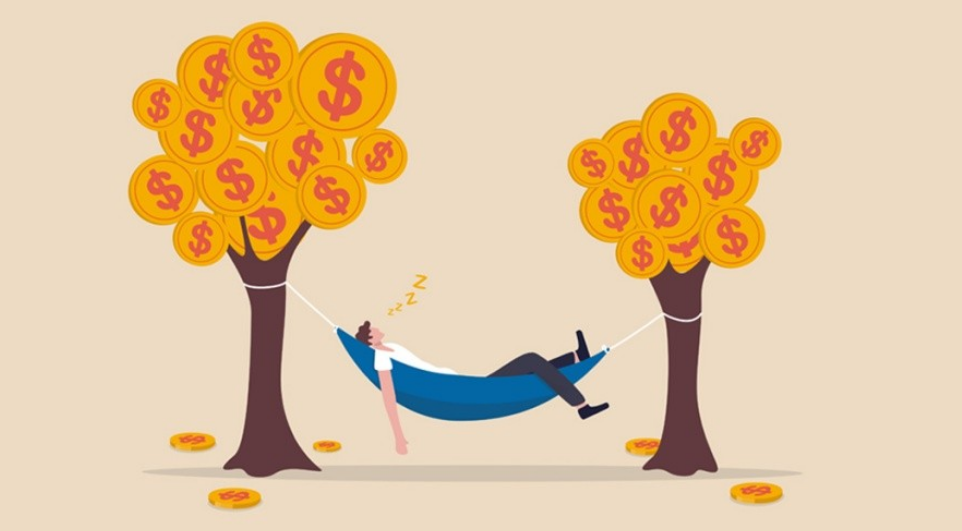
John D. Rockefeller once said he took true pleasure in seeing dividends come in. As the world’s first billionaire, he wasn’t alone in thinking this way, even back then. And today, hundreds of thousands of investors would say they feel the same. Some consider this a form of dependency. But what exactly is dividend dependency, and how can you overcome it?
Issuers and Dividends – Why Pay Them?
For companies, paying dividends on stocks is more about historical tradition than necessity, though things were different in Rockefeller’s time. Back then, there were no market regulators (at least not as we know them today), no public financial reporting, and no concept of “disclosure.”
So, how were investors supposed to know which issuers were worth their investment and which ones weren’t? Dividends were their sole available indicator. Regular payouts signaled a reliable company, naturally driving interest in its stock. This held in the U.S. market until 1934, creating a lasting habit among investors to trust dividend-paying issuers.
The creation of the SEC and the introduction of new market standards made evaluating companies much easier. Dividends evolved from a primary indicator to a supplementary, and often unnecessary, criterion. However, the inclination to trust companies with regular dividend payments persisted. As the American market quickly set the standard, traders and investors worldwide adopted this preference for dividend stocks.
In the early 21st century, some popular companies found themselves needing to reintroduce profit distribution to shareholders. This need arose when they could no longer grow in their industries, prompting previous leaders to find ways to sustain market interest. One effective solution was the “rent model,” or old-fashioned dividend payments. This trend emerged in the oil industry, electric utilities, telecommunications, and certain other sectors. This re-sparked interest in dividend-paying stocks and showed that long-held habits (this time from an investor’s perspective) could be very valuable.
Are Dividend Stocks an Irrational Choice?
Investors view dividend stocks as preferable, based on a habit developed over generations — one that, while powerful, is now irrational. Or is it?
It turns out it’s not. At least, this was convincingly demonstrated by two Nobel laureates, Modigliani and Miller, in their “Dividend Irrelevance Theory.” Its central conclusion: Receiving dividends offers investors no real advantage. Stock prices account for distributed profits, and this is true over any time horizon. This means dividends and selling a portion of shares yield the same results; dividend stocks don’t offer a performance advantage.
Moreover, dividend stocks generally underperform others for several reasons:
- Dividends come with taxes, reducing the amount available for reinvestment.
- Many dividend stocks are lower in value. For example, if both Microsoft and Intel distributed 20% of profits, the former would yield a 0.8% dividend, while the latter, 2.6%. This difference reflects a fundamental rule: higher yields mean higher risks. So, by selecting only dividend stocks for a portfolio, overall quality suffers, and it ends up with an unusually high concentration of problematic stocks, often underperforming the market. It’s not surprising—when companies lack other ways to attract investors, they use payouts as bait.
- Finding an ideal entry point for dividend stocks can be challenging—every investor has access to the payout calendar, knows who pays when and how much, and understands when to buy and sell.
Thus, there’s no rational basis for preferring dividend stocks. An investor acting on irrational motives is more likely to lose.
Dividends Bring Pleasure
The history of dividend stocks is full of remarkable events. For example, General Public Utilities (now First Energy) once proposed that shareholders forgo dividend payouts in favor of a new plan. This plan involved distributing new shares among investors, who could then sell them back to the company at a fixed price. Shareholders objected, the company’s CEO received a flood of insults, and the situation ultimately led to a significant drop in the stock price.
It seems many investors who receive dividends experience a thrill similar to that of Rothschild in his time. While there are many hypotheses about this phenomenon, no definitive explanation has been found:
- Some attempt to use the theory of the time value of money, which suggests that people place more value on payments received sooner, even if they are smaller than those they would receive later.
- Others believe that people experience a straightforward physical pleasure when receiving dividends (though this has not yet been scientifically confirmed).
Interestingly, many issuers pay dividends specifically because shareholders exhibit “dividend dependency” and want to receive payouts. This phenomenon has even earned a name: dividend dependency. However, this doesn’t refer to investors’ desire to receive dividends but rather the portfolio issues that arise as a result.
How to Address It
Overcoming dividend dependency requires understanding that a dividend-heavy portfolio is a barrier to higher returns and will prevent you from reaching your investment goals. But believing this often requires objective evidence.
A simple experiment could serve as this proof: compare a dividend portfolio to the broader market. In a calm period from 2018 to 2020, such an experiment showed that:
- A portfolio of the top 3 dividend stocks returned 59% overall.
- The S&P 500 index, during the same period, returned over 90%.
Increasing the number of dividend stocks in the experimental portfolio only worsens the outcome. To compensate for this imbalance (an unusually high number of low-yield, high-risk stocks), it is recommended to add a similar proportion of growth stocks to portfolios heavy in dividend stocks.

Julian Spellcaster
Hi, I'm writing for you!
I used to be a journalist, but I swapped writing stories for analyzing markets and making smart trades. Now, I help investors navigate the financial chaos with the confidence of someone who’s been there, done that.
P.S. In my free time, I collect antique maps — because, just like in investing, having the right map can lead you to great opportunities. I also enjoy poker, as it teaches me to stay calm and read the room, much like predicting market moves.