How Market Sentiment Affects Trading?

market sentiments

Investors and traders in the stock market use various methods to evaluate market conditions. Fundamental and technical analysis have long been trusted methods. However, some market participants find traditional analytical tools insufficient. To improve their decision-making accuracy, whether to open trades or close positions, they rely on additional comprehensive indicators. One of these is market sentiment.

What is Correlation and How to Use It in Trading and Investing?

Investors, when selecting securities for their portfolio, often encounter situations where, for instance, the price movements of several stocks are identical. Essentially, the dynamics of such assets demonstrate a close connection (correlation) between them. Including a set of such correlated instruments in an investment portfolio can lead to a significant increase in both returns and risks. The correlation coefficient helps assess the depth of this connection.

Why Doesn’t the Martingale Method Work in Financial Trading?

Various strategies and trading systems are applied in trading on financial markets. Most of them are based on preliminary analysis of price behavior and volumes to generate signals for making trades. However, some traders believe that profit can be achieved without putting effort into learning and gaining experience. Among such market participants, a strategy involving the incremental scaling of positions until a positive result is achieved is quite popular. They rarely question whether the Martingale method can be used in trading.

What Is Market Volatility?

Investors and traders assess their strategies and trading systems based on several criteria. The primary ones are potential profitability and risk level. Both depend on the price changes of selected assets or portfolios. The speed and magnitude of such changes are quantitatively assessed by calculating the volatility indicator. So, what is market volatility in simple terms, what does it depend on, and how is it used in trading?

Is The 200-Day Moving Average Effective in Trading?

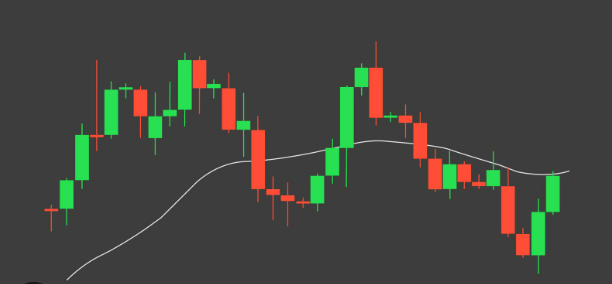
To conduct effective technical analysis of prices for any financial instrument, traders use graphical objects and technical indicators. While the former primarily answer the question of when to enter the market and fix profits or losses, the latter serve as a mathematical model of price behavior and can help identify patterns on charts. Even the simplest indicators possess these properties, which is why they have gained wide popularity. Among proponents of the latest technologies, such as neural networks, and fans of classical methods, heated debates continue regarding the accuracy and effectiveness of various indicators. For instance, investors try to determine if the 200-day moving average is effective in trading. Let’s try to answer this question.

What Is a “Black Swan” in the Financial Markets, and How Can You Benefit from It?

The term “black swan” (TBS) was introduced into common usage by Nassim Nicholas Taleb, who published the book “The Black Swan: The Impact of the Highly Improbable” in 2007. In it, he first used the expression “black swan events,” which readers began incorporating into everyday language.

Today, in both life and financial markets, “black swans” refer to events that are:

What is Spread in Trading?

Spread in Trading

In economics and finance, the term “spread” denotes the difference between two values of a characteristic or homogeneous but differing indicators. Most commonly, it is used concerning prices. Simply put, spread refers to the price difference of an asset or nearly identical goods. For example, spread indicates the difference in prices between: